Designing a System Around Your Yard
Every installation starts with the property itself. We look at the size and shape of the lawn, planting beds, slopes, sun and shade, and the water supply the system will run on. Those details decide how many zones the system needs and where each head goes.
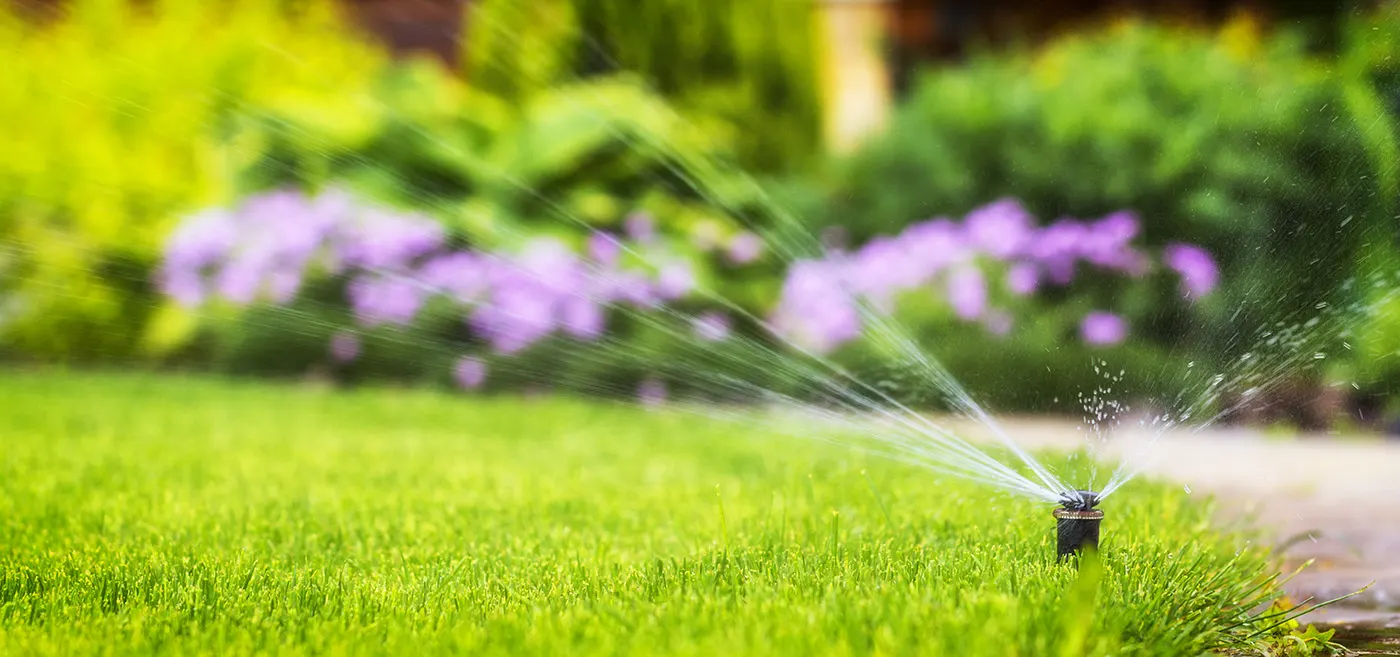
Lawn areas are usually covered with spray heads or rotors spaced for head-to-head coverage, meaning each head's spray reaches the next one. Beds and shrubs often do better on their own zones, and sometimes on drip irrigation, so they get the water they need without overwatering the turf around them.
What Affects the Cost of a New Sprinkler System
The price of an irrigation installation depends on the size of the property, the number of zones, how complex the layout is, the water supply and pressure available, existing landscaping and hardscape, and any site conditions that make trenching harder.
Rather than quote a flat number that fits nobody, we look at your yard and give you a clear, itemized estimate. There's no charge for the estimate.
What to Expect on Installation Day
Before any digging, underground utilities are located and marked. We then install the main line, valves, lateral lines, and heads zone by zone, connect everything to the controller, and test each zone for coverage and pressure.
Some trenching is unavoidable, but we keep disturbance to a minimum and restore the areas we work in. The job finishes with a walkthrough of every zone and the controller, so you know exactly how your new system runs.
Smart Controllers and Water Efficiency
A new system is the easiest time to set up smart watering. Weather-aware controllers adjust schedules to conditions and let you manage everything from your phone. Combined with good zoning and matched nozzles, they help avoid wasted water and high bills during the hottest months.